For one dressage rider, the frustrating part was how well rest seemed to work. The horse would look sound, training would get harder, and the same front leg would flare again. After his vet introduced a combination of TB-500 and BPC-157, the gelding made it back to full dressage work and stayed comfortable through his last checkup. His case is one reason riders ask about TB-500. A second gelding’s story shows how much can change before a horse is ready for a show ring.
What is TB-500?
- Quick verdict
- One dressage horse returned to full training during treatment with TB-500 and BPC-157. We don’t know whether he would have done as well with BPC-157 alone.
- How it was given
- The dressage vet gave the combination by injection under the skin.
You’ll see TB-500 and thymosin beta-4 used almost interchangeably online. In a study at a horse racing laboratory, the substance the researchers identified in a TB-500 preparation was a seven-amino-acid section of thymosin beta-4. The full-length molecule has 43 amino acids. A label that only says “thymosin” leaves a fairly important question unanswered. The equine laboratory’s analysis · FDA’s explanation of the two molecules.
Why would it interest someone with an injured animal?
That part of thymosin beta-4 helps it bind to a protein called actin. Cells use actin to change shape and move. Both jobs matter when cells travel into an injured area. That’s the biological idea behind the interest in tissue repair. Whether a treated tendon can stand up to a tight turn or a landing takes a different kind of test.
Two horses, two recovery stories
The dressage horse returned to full training
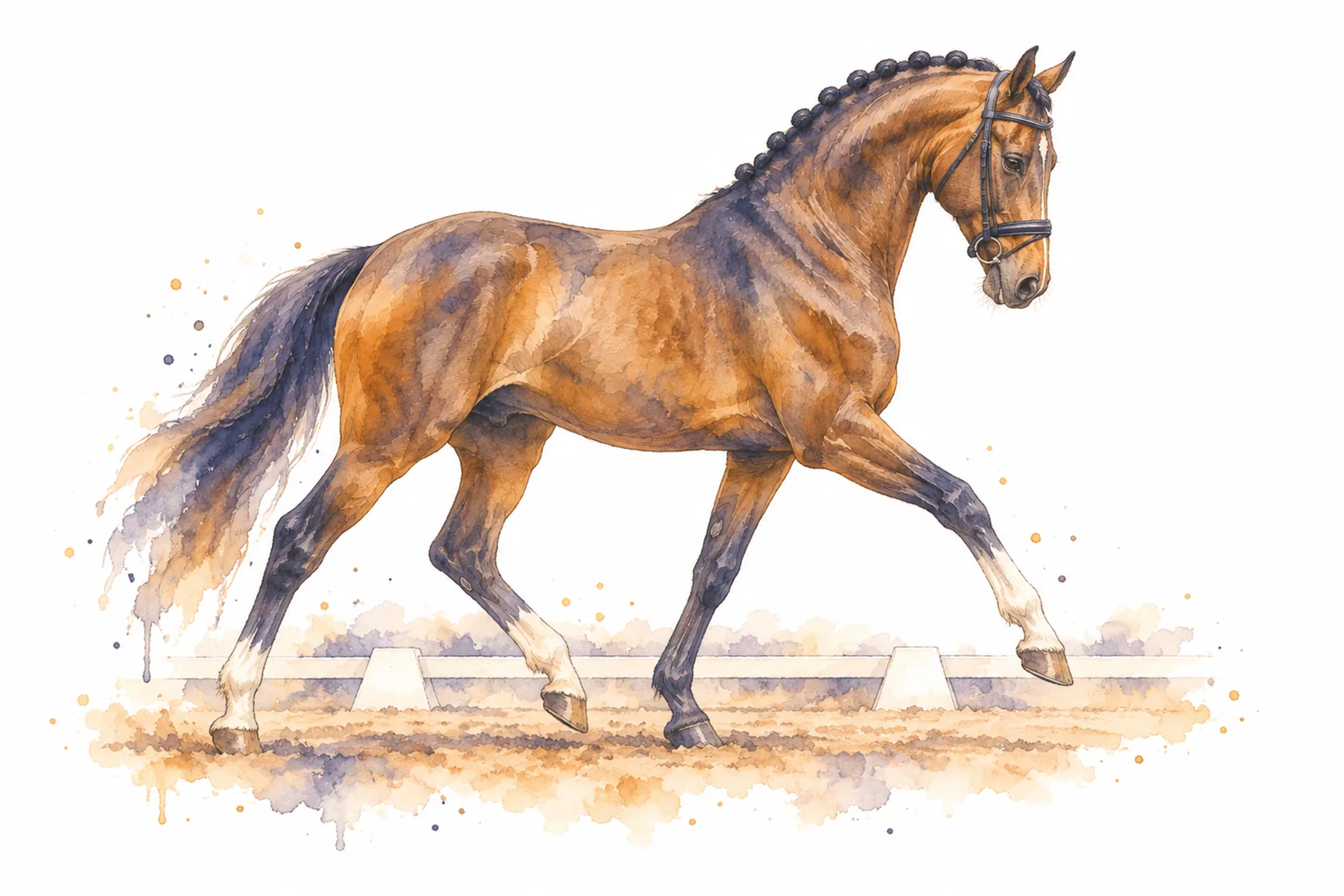
The dressage gelding had injured a tendon in his right front leg. He had already had injections and rehab before veterinarian David DaSilva tried the peptide pair. At the last scan, the tendon fibers lay parallel again, with a little scar tissue under the skin. His leg stayed cool and comfortable at the workload that used to bring on the limp. Follow his return to dressage or see the vet’s report.
The show jumper was less lame at his recheck
The second horse was an 11-year-old show jumper with an injury to the ligament supporting his fetlock. Veterinarian Charley McColough used shockwave therapy as well as both peptides. At his December recheck, he was less lame on gait analysis and the injured branch looked better on ultrasound. December is the last entry in his case file. His return to jumping is unknown. See the jumper’s follow-up.
Does TB-500 give BPC-157 an extra boost?
“Wolverine stack” is the nickname for taking the two together. Both equine vets used the pair. Neither compared it with BPC-157 alone, so the two comeback stories can’t settle whether adding TB-500 makes recovery faster. The horse lab that identified TB-500 in blood and urine answered a different question again. It measured what the horses had received and what their bodies did with it. It didn’t measure lameness.
Why do people talk about TB-500 for sports injuries?
If you hear someone at the gym mention the “Wolverine stack,” they mean pairing TB-500 with BPC-157 in hopes of getting back to training sooner. How much sooner? The FDA’s review of the short TB-500 fragment found no human studies that could answer that question. Read the FDA review of TB-500.
There is a human wound-healing trial behind some of the interest. It involved 73 people with slow-healing leg ulcers. Researchers applied a gel containing full-length thymosin beta-4 to the sores. That distinction matters if you’ve heard the trial cited for a pulled hamstring. The gel contained a longer molecule, and the team studied open wounds. Read the leg-ulcer trial.
What does this mean for a dog with a bad knee?
In veterinarian Shelby Watson’s dog series, some oral products combined BPC-157 with an ingredient described as a thymosin beta-4 analog. One dog later needed platelet-rich plasma after further trouble. The report doesn’t establish that the analog was the exact seven-amino-acid fragment tested in horses. If someone points you to the dog paper for a particular blend, ask which product the dog in the story actually got. Read Watson’s clinical accounts.
How was it given, and what should a rider check?
DaSilva describes injections under the skin in the dressage horse. An oral blend is a different preparation. The case reports also cover too few animals to put odds on side effects. If your horse competes, give the event’s medication program the ingredient names and class before entering. A sound horse can still have a medication eligibility issue. US Equestrian’s Drugs & Medications Program.
Our take is that the repeat scans and the dressage gelding’s return to work make these cases worth reading. For a pet dog with a new limp, a diagnosis will tell you far more about the likely recovery than the nickname of a stack. Read the companion BPC-157 guide.
Sources
- The equine laboratory’s analysisnih.gov
- FDA’s explanation of the two moleculesfda.gov
- See the vet’s reportvetbiologix.com
- See the jumper’s follow-upvetbiologix.com
- Read Watson’s clinical accountsahvma.org
- US Equestrian’s Drugs & Medications Programusef.org
- Read the FDA review of TB-500fda.gov
- Read the leg-ulcer trialnih.gov