If your older dog still races to the door for a walk but takes longer to get up afterward, you may have come across collagen powder for stiff joints. If your cat has diabetes, your vet may already have prescribed a peptide: insulin. Both are peptides. What they can do for your pet depends on which one you mean and what’s causing the trouble.
What is a peptide, and how does it work?
A peptide is a short chain of amino acids, the building blocks of protein. The order of those amino acids matters. Your pet’s body makes insulin to signal that cells can take up sugar from the blood. Collagen peptides are a mixture of small pieces of collagen, the protein found in tendons, skin and other connective tissue.
Start with what brought you here. For a dog with arthritis, the useful question is whether a joint powder helped dogs put weight on a sore leg or enjoy a longer walk. For a horse coming back from a tendon injury, it’s whether the leg held up once training started again.
| Potential benefit or use | Peptide and what we know |
|---|---|
| Easier walks and less stiffness in older dogs |
|
| Getting back to activity after a muscle or tendon injury | |
| Helping a wound heal |
|
| Healing after intestinal surgery |
|
| Soothing an inflamed gut | |
| Managing blood sugar or excessive thirst |
|
| Relieving itchy skin, dry eyes or sore ears |
|
Jump to common questions about peptides for pets

Stiff joints, torn muscles and tendon injuries
Collagen peptides For stiff joints
If you’ve seen a tub of collagen in the skincare aisle, you’ll recognize the ingredient on joint chews and powders for dogs and horses. The appeal for someone with an older dog is pretty simple. Will getting out of bed feel easier? Will they want to walk a little farther?
- Quick verdict
- I wouldn’t count on collagen alone to make walks noticeably easier for an arthritic dog. Neither dog trial picked up that kind of improvement at home.
- How it’s given
- By mouth, usually as a powder mixed into food, a chew or an ingredient in a joint diet.
In one 12-week trial, dogs taking collagen put more weight on their sore leg on a treadmill. Back home, their activity monitors and pain scores looked much like those of dogs on placebo. In a second trial, dogs eating a food with added collagen walked about as well as dogs on the comparison food. The horse results were more encouraging. After six weeks, vets saw less lameness in the higher-intake group, and owners said their horses were more willing to run. Compare the two dog trials or read about the horses.
Some owners on Reddit think collagen helped. One said their older Doberman could jump onto the couch again and groaned less when she got up after they started adding collagen peptides to her breakfast. Another thought unflavored collagen powder helped their corgi mix and mentioned giving turmeric too. Read the Doberman owner’s comment or the corgi owner’s comment.
BPC-157 For knees and muscle injuries
One of the better BPC-157 stories online starts with a dog, almost 15, getting the zoomies on a slippery floor. What stuck with his owner was the walk afterward. The dog went farther and had more bounce in his step. He was already getting Librela for joint pain when his owner added BPC-157. Another owner, this time with a 16-year-old dog with arthritis, wrote about seeing their dog move more easily. Read the zoomies update and the senior dog’s story.
- Quick verdict
- Promising for muscle recovery in rats. Owners and vets have described dogs moving more easily, but we don’t yet know how often a dog with a sore knee will improve on BPC-157.
- How it’s given
- By mouth or by injection. A vet described oral use in dogs, and the owner in the zoomies story reported injections under the skin.
The muscle research helps explain the attention. After researchers cut a thigh muscle in rats, the treated rats recovered more use of the leg. In a small human clinic report, 11 of 12 people who received BPC-157 alone for knee pain reported improvement after a knee injection. The clinic had no comparison group. For dogs, veterinarian Shelby Watson published four knee cases and followed some of those dogs for years. Rat muscle study · Human knee report · Watson’s dog cases.
In sports and fitness circles you may also hear about the “Wolverine stack”. That’s the nickname for pairing BPC-157 with TB-500. The World Anti-Doping Agency prohibits both for human athletes in and out of competition. See the WADA list or read the full BPC-157 guide.
TB-500 The “Wolverine stack”
A dressage gelding kept going lame whenever training got harder. His vet tried BPC-157 and TB-500 together. By his follow-up, the horse was keeping up with full dressage training. The ultrasound showed that the fibers in his injured tendon lined up normally again, with minimal scarring. Follow the gelding from his first limp back to dressage.
- Quick verdict
- The horse got back to work. Whether adding TB-500 helped him heal faster than BPC-157 alone is still an open question.
- How it’s given
- The equine report describes the combination given by injection under the skin.
The idea behind the pairing is that TB-500 might give tissue repair an extra boost. The vets treating a show jumper also used the pair, alongside shockwave therapy, and saw less lameness at his recheck. One wrinkle if you go looking for the underlying science is that papers on full-length thymosin beta-4 and products labeled TB-500 can describe different molecules. Read the jumper’s story or read the full TB-500 guide.
Gut inflammation and healing after surgery
BPC-157 For intestinal repair
Can the intestine heal well enough to hold together after surgery? Researchers tested that in rats by reconnecting two ends of the bowel. The surgical join healed better in rats given BPC-157. In another experiment, the researchers also saw better healing in rats with an inflamed colon. Read the small-intestine surgery study and the colon study. What did BPC-157 change in the gut studies?
- Quick verdict
- Interesting evidence for intestinal healing after surgery in rats. Whether it helps a pet recover after an operation or settles recurring diarrhea is unknown.
- How it’s given
- By mouth in drinking water or by injection in the colon experiments.
KPV For an inflamed gut
KPV is only three amino acids long. Researchers put it in the drinking water of mice with colitis. When they examined the mice, the lining of the colon showed less damage and inflammation. That’s the finding behind a lot of the interest in KPV for gut health. Read the mouse study or read the full KPV guide.
- Quick verdict
- Worth following for colitis research. We don’t yet have a result that tells an owner whether their dog’s or cat’s loose stools will improve.
- How it’s given
- By mouth in the mouse study.
Diabetes, excessive thirst and low blood sugar
Insulin For diabetic cats and dogs
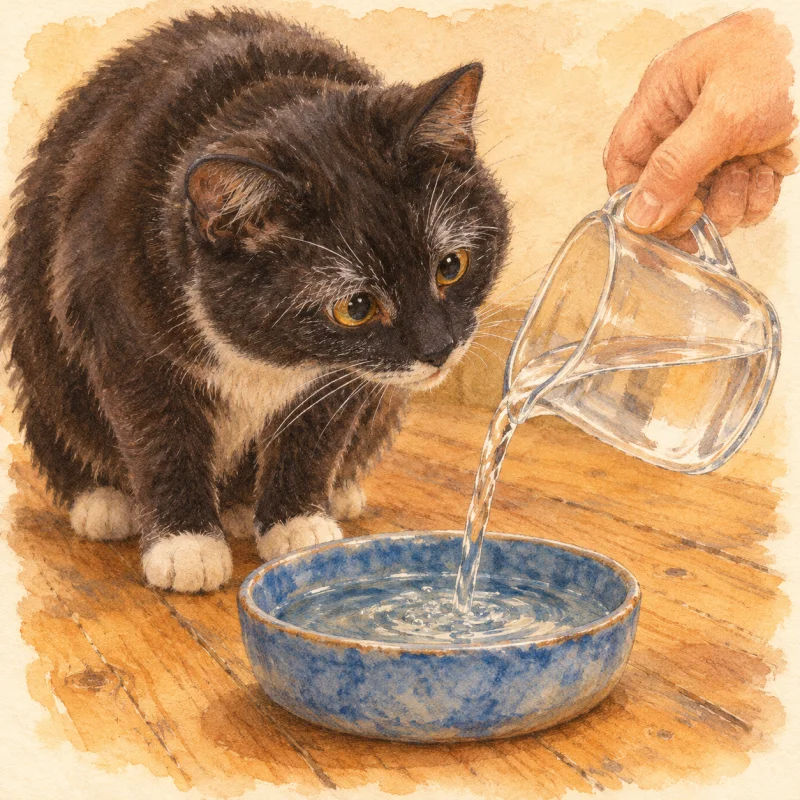
This is an established prescription treatment for diabetes mellitus. Owners often notice the water bowl and litter box first. After 45 days on ProZinc, 111 of the 146 cats who started out drinking excessively had improved on that measure. Read what owners noticed in the cat study.
Desmopressin For dogs who can’t conserve water
Central diabetes insipidus also causes extraordinary thirst and large amounts of urine, but the missing signal tells the kidneys to save water. Desmopressin stands in for that hormone. Dogs treated for this diagnosis in a 20-dog case series responded well. Read the dogs’ diagnoses and follow-up.
Glucagon For dangerously low blood sugar in dogs
Some pancreatic tumors release too much insulin. In an emergency hospital, vets can use glucagon to bring blood sugar back up. A report follows 11 dogs treated for that specific complication. Read the hospital case series.
Exenatide In cats whose diabetes was in remission
This drug mimics a gut hormone called GLP-1. Researchers followed 22 cats to see whether it could help them stay off insulin longer. The cats on exenatide stayed in remission about as long as those on placebo. Read the two-year feline study.
Itchy skin, dry eyes, ear infections and wounds
Cyclosporine For allergic skin disease in cats and dry eye in dogs
Cats with allergic dermatitis sometimes scratch their skin raw. A vet can prescribe oral cyclosporine, a ring-shaped peptide that calms the immune response. Dogs with a particular kind of chronic dry eye may receive the same ingredient in a prescription eye ointment. Read about allergic cats or see the canine eye treatment.
Polymyxin B For certain outer-ear infections in dogs
It’s a peptide antibiotic found in prescription ear drops. In Surolan, it’s combined with an antifungal and a steroid. A vet looks at the ear and eardrum to decide whether that combination fits the infection. Read about the ear drops and the dogs studied.
GHK-Cu For wound research in rats
This small peptide binds copper. In an experiment in rats, more connective tissue, including collagen, accumulated in treated wound chambers. That finding explains the interest in wound repair. An open wound on a pet needs an exam. Read the original wound study.
What are these peptides used for in people?
If you first heard about peptides from a running partner or someone with a sensitive gut, these are probably the names you heard. The human stories behind them are quite different.
- BPC-157 for knee pain and ulcerative colitis. A clinic followed up with people who had knee injections. A separate trial asked whether BPC-157 helped calm an inflamed colon.
- TB-500 for sports recovery. People pair it with BPC-157 hoping to get back to training. The human leg-ulcer trial you might hear about used the longer peptide, thymosin beta-4.
- KPV for gut or skin inflammation. Sellers mention Crohn’s disease and psoriasis. The gut research people cite looked at human cells in a lab and at mice with colitis.
Common questions about peptides for pets
Are peptides steroids?
No. Peptides are made of amino acids. Steroids have a different chemical structure. A single medicine can contain both: in the dog ear drops mentioned above, polymyxin B is the peptide antibiotic and prednisolone is the steroid that reduces inflammation.
Are collagen peptides real peptides?
Yes. Think about what’s in a scoop versus what’s in a prescription. A collagen powder contains a mixture of small pieces of collagen. A name like insulin or BPC-157 refers to a particular molecule with a specific sequence of amino acids. Both fit the word “peptide.” They do different jobs.
Do vets prescribe peptides for pets?
Yes. Insulin for a diabetic cat and cyclosporine for a dog with dry eye are two everyday examples. Vets have also described using BPC-157 or TB-500 in individual injury cases. Those reports tell you how those animals fared. They don’t establish a standard treatment for every dog that limps.
Do pets take peptides by mouth or by injection?
Both, depending on the product. A dog can eat collagen powder mixed into dinner. A diabetic cat may receive prescribed insulin under the skin. Cyclosporine for a dog’s dry eye comes as an ointment applied to the eye itself. If you read about an injection and you’re looking at a chew with the same ingredient, check which form was actually studied.
Are peptides safe for my pet?
The specific ingredient matters here. Insulin is a good example: it can bring a diabetic cat’s blood sugar under control, but it can also bring it too low. That’s why the vet follows the cat’s blood sugar as well as changes you can see at home. For a supplement you’re considering, bring the label and your pet’s medication list so you can ask about that particular combination. Read the feline insulin safety findings.
When should I consider a peptide for my pet?
Start with the change you want help with. If your dog now needs a second try to stand up, tell your vet when that started and whether it happens after every nap or only after a long walk. Once you know what’s sore, you can ask a much better question: “For my dog’s arthritis, would adding collagen make a noticeable difference on walks? When should we check?” A pet that suddenly can’t stand or bear weight needs prompt care.
How long have peptides been used in animals?
At least a century. In Toronto in 1921, researchers found that a pancreatic extract lowered blood sugar in diabetic dogs. That work led to insulin treatment in a person in 1922. Much later, researchers were asking quite different questions: could a copper peptide change wound repair in rats in 1993, or could BPC-157 affect recovery after a muscle injury in rats in 2006? Today a vet can prescribe insulin, while those early injury experiments are still part of the story behind newer peptides. See the Toronto team’s early records.