
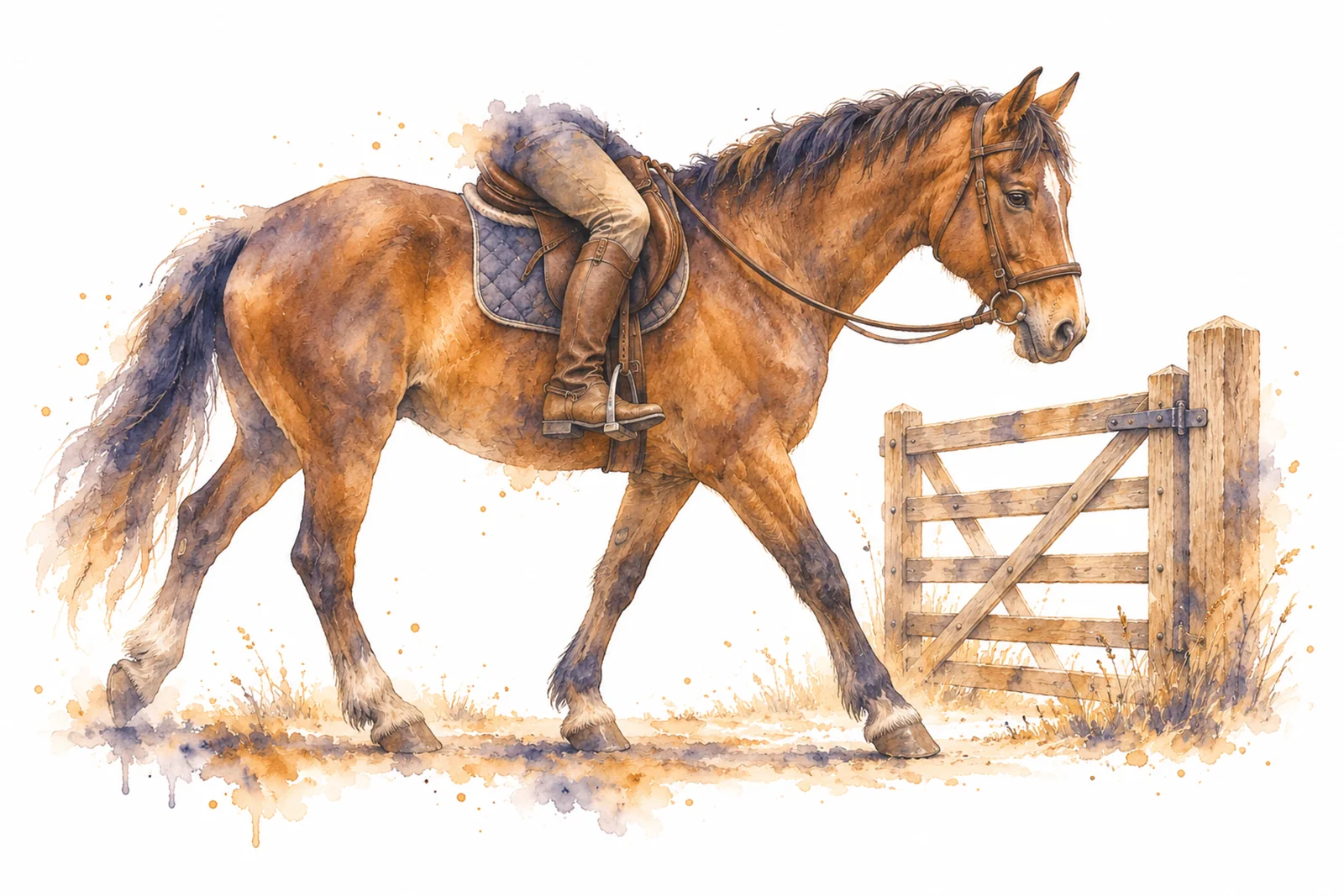
A dressage gelding looked sound after rest. Every time his rider asked for harder work, the same front leg flared up again. After a course of BPC-157 and TB-500 alongside his rehab, he got back to full dressage training. His last ultrasound showed the tendon fibers running parallel again, with a little scar tissue under the skin. For his rider, the news was that the leg stayed comfortable through work it hadn’t tolerated before. Read the gelding’s story.
What is a peptide?
A peptide is a short chain of amino acids. At the feed store, “collagen peptides” means collagen protein broken into smaller pieces. In an equine vet’s treatment notes, BPC-157 refers to one particular chain. The word “peptide” covers both, even though a scoop in the feed bucket and an injection during rehab have quite different purposes.
How are peptides being used for horses?
Riders usually come across peptides in one of three places: a joint supplement for a horse who’s stiff warming up, a conversation about a tendon or ligament injury, or a gut supplement. There’s equine research behind the first two conversations. For the gut products, much of what gets shared around the barn comes from work in other animals.
How peptides work in a horse’s body
What a peptide does depends on its amino-acid sequence and where it reaches the body. Researchers studying BPC-157 added it to pieces of rat tendon and saw more repair cells move out into the surrounding material. An equine vet can’t watch those cells move under a bandage. What they can follow is how the injured fibers look on repeat scans and how the leg holds up as work increases. Read the tendon experiment.
Which peptide goes with which concern?
| What you’re asking | Peptide | What happened |
|---|---|---|
| Could a feed supplement help an arthritic horse move more comfortably? | Collagen | Vets recorded less lameness in the higher-intake group of a 12-week equine study. |
| Why do BPC-157 and TB-500 come up after soft-tissue injuries? | BPC-157 and TB-500 | A dressage gelding returned to training. A show jumper was less lame at his recheck after shockwave therapy and the same peptide pair. |
| What about a peptide for the gut? | KPV or BPC-157 | The studies here looked at mouse colons and rat bowel surgery. Neither tested healing of stomach ulcers in horses. |
Collagen for horses with stiff joints
In a 12-week study involving 38 privately owned horses with osteoarthritis, vets examined the horses and owners recorded what they saw between visits. By six weeks, vets recorded less lameness and less pain on joint flexion in the higher-intake group. Owners described easier movement and more willingness to run. Only one of the two study centers used a placebo. It’s an encouraging result for that feed supplement, especially if stiffness is the change you notice first when you bring your horse out. Read the equine collagen study.
BPC-157 for tendons and ligaments
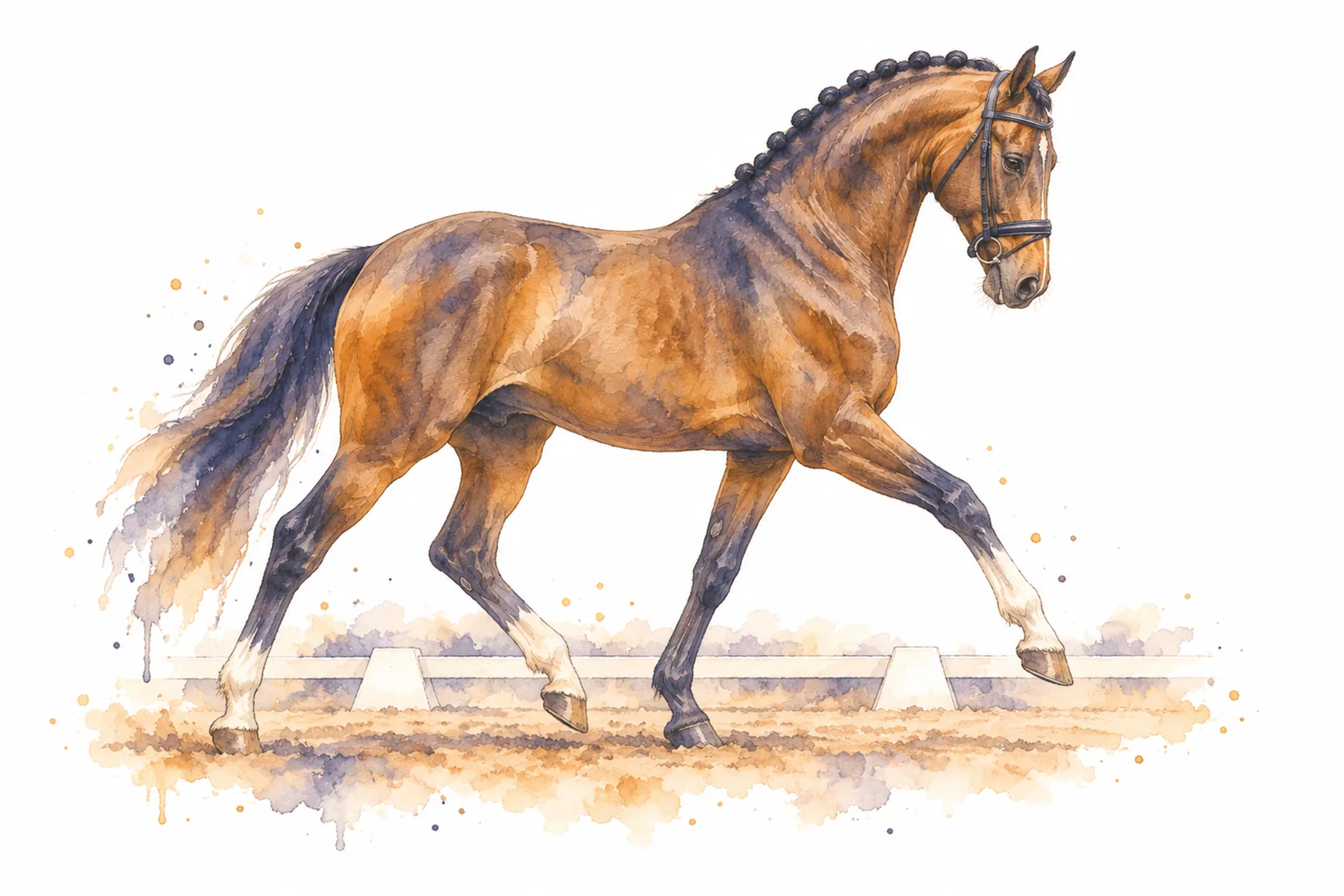
The dressage gelding had injured a tendon. An 11-year-old Dutch Warmblood jumper injured something different: the outer branch of the ligament that supports the fetlock. His vet combined shockwave therapy with BPC-157 and TB-500. By the December recheck, video gait analysis showed less lameness, and the branch looked better on ultrasound. That’s where his record ends. The dressage gelding’s report goes a step further and describes the work he got back to. See the jumper’s scans.
KPV and the horse with gut trouble
KPV drew attention after mice with colitis developed less bowel inflammation when given the peptide in water. BPC-157 has also been studied in rats recovering from bowel surgery. If your horse is off feed or seems uncomfortable around mealtimes, tell your vet what changed and when. A sore stomach, an inflamed colon and a healing surgical wound are three different problems. What the KPV gut study measured.
TB-500 and the Wolverine stack
That nickname means using TB-500 and BPC-157 together. Both geldings received the pair, so their records describe the outcome of combined care. They don’t tell us whether the dressage horse would have done as well on BPC-157 alone. TB-500 also gets confused with full-length thymosin beta-4. A racing laboratory identified a short fragment of that longer molecule in a TB-500 preparation. That distinction matters when you compare a product label with a paper. Read the TB-500 guide.
How are peptides administered to horses?
Collagen supplements go in the feed. The jumper’s vet used injections under the skin during rehab. If a tub and a vial carry a similar name, check which form the equine report actually used. Ask your vet who will give the product and how it fits with the exercise and recheck schedule already in place.
Are peptides safe for horses?
In a supplier’s report on 11 horses in rehab, the team recorded no injection-site reactions or other adverse events over 40 days of treatment and 30 days of follow-up. That gives owners a specific observation for that combination and time period. It still leaves longer use and other preparations open. Tell your vet about every medication and supplement in the feed room before adding one. Read the supplier’s equine summary.
Are peptides right for your horse?
Decide with your vet what a useful improvement would look like for this horse. For an older companion it might be walking downhill comfortably. For a competition horse it might be staying sound the morning after a harder session. Ask which finding would justify the next increase in work. Read what “back in work” meant to two owners.
Working with an equine vet who uses peptides
Bring the product label, your rehab calendar and the dates of any upcoming shows. Ask why the vet would choose this peptide for the structure involved, whether it changes the existing treatment plan, and what they want to see at the next exam. Agree on whom to call if heat, swelling or lameness returns.
Questions horse owners ask
Are peptides steroids?
No. They’re different kinds of molecules. A substance can still be restricted in competition regardless of which group it belongs to.
Can my horse compete while taking this supplement?
Check the exact ingredients and the rules for your class with the governing body before competing. For U.S. Equestrian events, take the show date and complete label to your vet and the USEF Drugs & Medications Program. A barnmate’s timeline for a different product or discipline won’t settle your horse’s eligibility.
Does a better scan mean my horse is ready to jump?
A scan and a return to jumping are separate milestones. The jumper’s last report documented better ligament fibers and a better gait exam. Clearance for the next workload is a decision for the vet following that horse.
Sources
- Read the tendon experimentphysiology.org
- Read the equine collagen studynih.gov
- See the jumper’s scansvetbiologix.com
- Read the supplier’s equine summaryshopify.com
- USEF Drugs & Medications Programusef.org