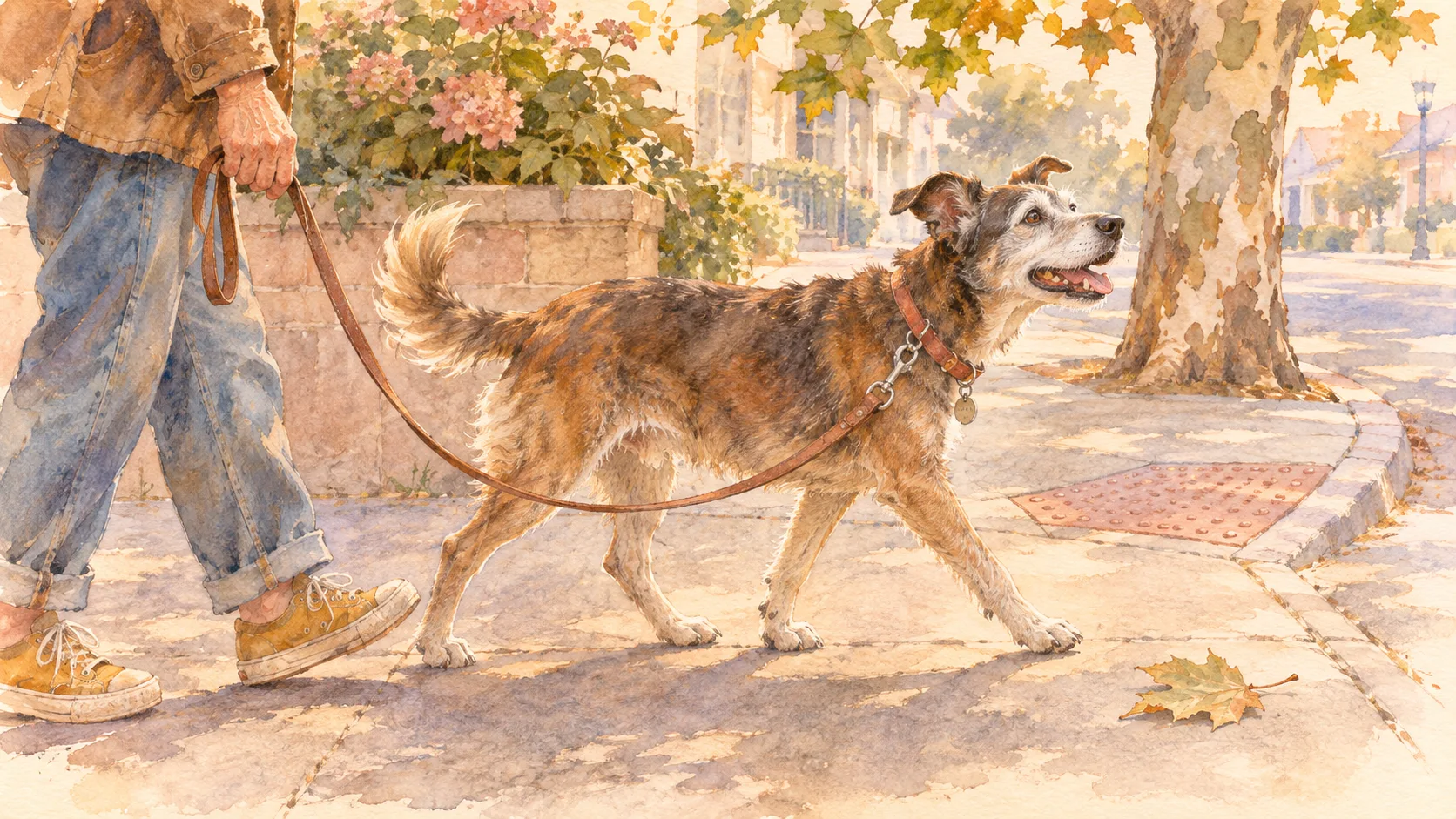
The Rottweiler had already been through one knee surgery on his right leg. When he started favoring the left, his owner booked a second operation. Then the limp eased while the dog was receiving BPC-157 and supportive herbs, and the owner canceled the surgery. Two and a half years after his first visit, he could regularly run a mile. At the four-year check-in, a walk that long could still leave him sore for days.
Veterinarian Shelby Watson followed that dog for four years. Her report on four dogs with knee injuries is worth reading for the part a before-and-after video rarely shows. The owner got their running partner back for a time. Years later, they had to shorten their walks again.
BPC-157 is the peptide in that knee story. Collagen peptides are the ingredient you might spot in a joint chew at the pet store. If you're wondering what either has to do with the KPV in a digestive powder, start with what those names mean.
What "peptide" means, in plain English
Amino acids are the building blocks of protein. String a short chain of them together and you have a peptide. BPC-157 has 15 amino acids in a particular order. Collagen powder contains a mixture of short chains made by breaking down a much larger protein. Turn the packet around and look for the ingredient name. That's how you tell which research applies to what's in your hand.
How are peptides being used for dogs?
If you've seen people talking about peptides on social media after a running injury or knee surgery, you might have wondered whether anyone uses them for dogs. Some holistic vets have been using them for years. In 2024, veterinarian Shelby Watson published follow-ups on four dogs she treated for knee problems. Peptides were part of their care. Read Watson’s case reports.
- Joint pain and mobility. Owners of dogs with arthritis often come across collagen peptides when shopping for joint chews. Owners ask about peptides for IVDD, too. IVDD affects the discs in the spine, so the arthritis studies answer a different question.
- Recovery after injury or surgery. BPC-157 and TB-500 come up when a dog hurts a knee or tendon. Owners want to know when their dog will be comfortable putting weight on that leg again, and whether anything can help alongside rehab.
- Gut health. KPV and BPC-157 have drawn interest for their effects on the gut lining in animal studies. For someone whose dog has loose stools, the goal is usually pretty simple: a comfortable meal and a full night’s sleep.
How peptides work in a dog’s body
Some peptides act as messengers. A cell has a receptor that recognizes a particular peptide. When the two meet, the cell gets a signal to do something, such as change how it uses energy. Other peptides take a different route into the cell.
Take KPV, one of the peptides you’ll see in digestive powders. In a lab study, cells from the intestinal lining drew KPV inside using the same transporter they use for small pieces of protein. Once inside, KPV dampened some of the signals that drive inflammation. That helps explain why researchers went on to test it in mice with inflamed bowels. Read the KPV study.
Which peptide goes with which concern?
| What you're wondering | Peptide | What researchers or owners saw |
|---|---|---|
| Could a joint chew help my older dog get around? | Collagen | Dogs in one trial put more weight on a sore leg. Their activity trackers recorded no extra movement at home. |
| Why do people bring up peptides after a knee injury? | BPC-157 | Watson's Rottweiler returned to running while receiving BPC-157 and other care. |
| Why are peptides in digestive products? | KPV and BPC-157 | KPV reduced bowel inflammation in mice. Rats given BPC-157 passed formed stools sooner after colon surgery. |
| What's the “Wolverine stack” I keep hearing about? | TB-500 with BPC-157 | A vet followed a dressage horse who got back to full training after a recurring tendon injury. |
Collagen for the dog who's slow to get up
In one 12-week trial, dogs with arthritis who ate a specific collagen supplement put more weight on their sore leg on a treadmill than dogs given a placebo. That's encouraging if you watch your dog lean to one side when they get up. At home, though, activity monitors recorded no clear difference between groups. In a second study, dogs on both diets improved over 12 weeks. Adding collagen made no detectable difference to their mobility. Treadmill and activity study · Diet comparison
Would I expect longer walks from a scoop of collagen at breakfast? Those two trials give me little reason to. The most interesting finding was a change in how much weight the dogs put on one leg.
Why BPC-157 comes up in knee and gut conversations
BPC-157 is a synthetic chain of 15 amino acids that keeps turning up in conversations about knees, tendons and the gut. In lab work on pieces of rat tendon, more repair cells grew and moved more readily when researchers added BPC-157. In a rat colon study, treated animals were passing formed stools by day three after bowel surgery, while untreated rats kept losing weight. Rats given a stomach-irritating drug developed less stomach damage when they also received BPC-157 — which is why "gut protection" follows the peptide around.
Two very different observations explain the appeal. In the colon surgery experiment, researchers could examine the bowel itself and saw smaller areas of damage in the treated rats. A dog owner on Reddit described something easier to picture. Their nearly 15-year-old dog started going farther on his usual walk after they added BPC-157 to his existing Librela treatment. Then he got the zoomies on a slippery floor, and the owner had to slow him down. Read the owner's update.
Why KPV shows up in digestive powders
KPV takes its name from three amino acids: lysine, proline and valine. In mice with colitis, adding KPV to drinking water reduced inflammation. Under the microscope, the lining of the colon showed less damage. That's the finding behind much of the interest in KPV for gut health. The question an owner cares about is whether a powder will settle their dog's stomach enough to sleep through the night. The mouse study measured a different outcome. Read the gut study.
TB-500 and the Wolverine stack
"Wolverine stack" means pairing TB-500 with BPC-157. One of the better accounts of the combination follows a dressage gelding. His leg would settle with rest, then the same tendon would flare when his rider asked more of him. After his vet, David DaSilva, used both peptides by injection under the skin, the gelding returned to full dressage work, and his last scan showed parallel tendon fibers with only a little scar tissue under the skin. See the ultrasound follow-up in the vet's report.
There's a wrinkle if you're looking up TB-500 yourself. A racing laboratory analyzed a preparation labeled TB-500 and identified a seven-amino-acid fragment of thymosin beta-4. Papers about the full-length molecule, which has 43 amino acids, are easy to turn up in the same search. Check which one the researchers actually tested. Read the laboratory identification.
How are peptides administered to dogs?
The form depends on the peptide and what it’s being used for. Here are three you might come across:
- By mouth. Dogs can take peptides in capsules, powders or chews. The dogs in the collagen joint studies ate the collagen with their food. BPC-157 also comes in capsules.
- By injection. You may hear a vet say “subcutaneous,” which means under the skin. In a BPC-157 study, researchers gave beagles injections into a muscle or vein and measured how much peptide reached the blood. Those results don’t tell us how much a dog absorbs from a capsule. Read the beagle study.
- On the skin. Some veterinary skin products contain peptides. One example is a cleansing foam for dogs that contains the peptide AMP2041 and is applied directly to the affected area. See the foam’s ingredient list.
If your vet prescribes a peptide, follow their directions for that particular product, including how to give it, how much to give and when.
Are peptides safe for dogs?
The answer depends on which peptide you mean. A collagen chew for an older dog and a vial of BPC-157 raise different safety questions. For BPC-157 specifically, beagles monitored for two weeks after a single injection into the muscle showed no signs of acute toxicity. In a separate 28-day test of daily injections, the FDA’s review flagged changes in a blood-clotting test and some blood chemistry results. Long-term use of oral capsules in senior dogs is still an open question. Read the safety study and the FDA’s review of the beagle results.
For your own dog, the ingredient, dose, product quality and length of use all matter, as do age and existing health conditions.
Are peptides right for your dog?
If you’re wondering whether a peptide is worth discussing, start with what you’d like your dog to be able to do again. That gives you and your vet something specific to weigh. For example:
- Your dog has arthritis. Their usual walks are going well, but getting up from the kitchen floor is still hard.
- Your dog is recovering from an injury or surgery. You’d like to know whether anything could help alongside the rehab plan.
- Your dog improved at first, then progress leveled off. You want to understand what’s holding them back and whether another treatment makes sense.
A plateau is a good reason for a recheck. A short video of your dog getting up or walking can show your vet what’s changed since the last visit. If you do agree to try a peptide, keep the basics in place: their regular food, the activity your vet recommends, and scheduled checkups.
Working with a vet who uses peptides
Start with the vet who knows your dog’s history. If you’d like a second opinion, ask for a referral to an integrative vet or use the American Holistic Veterinary Medical Association’s VetFinder. Before you book, ask whether the vet has used the specific peptide you’re curious about in dogs with the same condition.
Bring the product label and a list of everything your dog takes, including supplements. Here are four questions worth taking to the appointment:
- Which peptide would you consider for my dog, and what improvement would you expect to see?
- How would you choose the dose and decide how long to try it?
- Could it interfere with any of my dog’s medications or complicate an existing health problem?
- What should I track at home, when should we check back, and what side effects would mean I should call sooner?
Questions to bring to the vet
Are peptides steroids? No. Peptides are chains of amino acids. Steroids have a different chemical structure. If you've heard your vet discuss a steroid for inflammation, seeing the word “peptide” on a joint product doesn't tell you it does the same job.
Do vets use BPC-157 for dogs? Yes. Watson described using it in her practice and telling the owners the treatment was experimental. In the U.S., BPC-157 has no FDA approval for dogs. If your vet suggests it, ask what change they'd look for at the recheck. For Watson's Rottweiler, how he felt after a mile eventually mattered as much as whether he could finish it.
What does a certificate of analysis tell me? First match the lot number on the report to the one on the package. Then read which tests the lab ran. A report can tell you which peptide a lab found and the purity it measured. Sterility requires its own testing.
Sources
- Report on four dogs with knee injuriesahvma.org
- Treadmill and activity studyplos.org
- Diet comparisonnih.gov
- The colon surgery experimentkrakow.pl
- Read the owner's updatereddit.com
- Read the KPV studynih.gov
- See the ultrasound follow-up in the vet's reportvetbiologix.com
- Read the laboratory identificationnih.gov
- Read the beagle studynih.gov
- See the foam’s ingredient listuzh.ch
- Read the safety studynih.gov
- The FDA’s review of the beagle resultsfda.gov
- American Holistic Veterinary Medical Association’s VetFinderahvma.org